
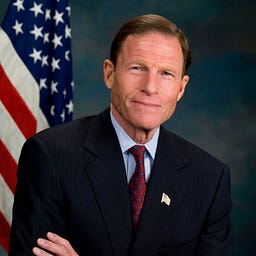
Senator Richard Blumenthal
June 2, 2026 · Newsletter
Freedom, Democracy, Security. Ukraine’s Fight Against Russia’s Bloody Invasion.
The pounding on my Odesa hotel room door at 3:35 AM is loud and annoying—especially because I’m getting the first real sleep on a trip to Ukraine following an overnight plane flight and two overnight train rides. It’s another air raid—third or fourth that day? I’ve lost count. We hustle downstairs to a small bunker equipped with water and chairs, and little not, where we sit until the all-clear is sounded. I try unsuccessfully to go back to sleep.
Not long before, the agenda of speeches and panels at the Black Sea Security Conference—where I appeared—is interrupted twice by air raids. In the bowels of the exquisitely beautiful, world-renowned Opera House is a drab concrete-walled bunker, which is temporary quarters for government leaders, staff, Opera House workers, and everyone else in the building. Since the press is there too, Congressional colleagues and I hold an impromptu availability.
And so it goes on my tenth trip to Ukraine in the past 4 plus years—an exhilarating tableau of heroism and humor, courage and caring, dedication and danger. And constantly, a radiant kindness, gratitude, humility and humanity.
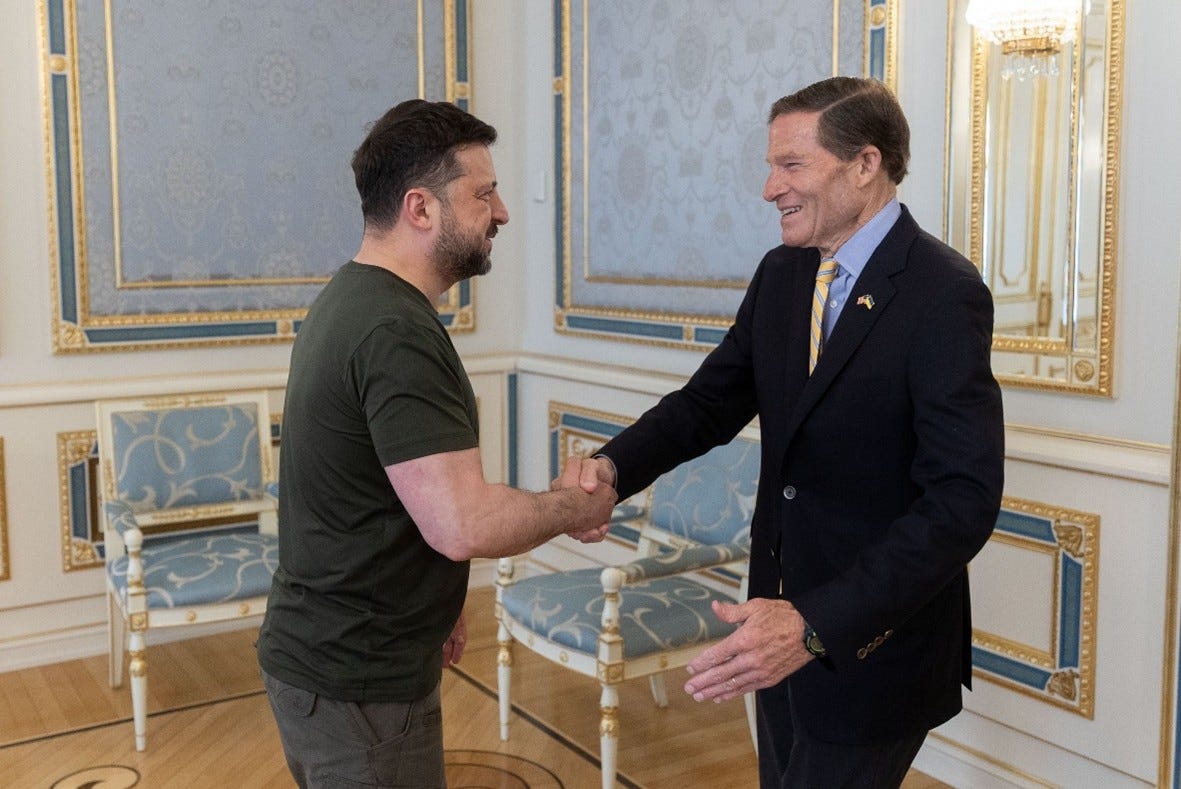
During my trip, I met with President Zelenskyy to discuss security priorities as Russia continues to wage war. See more here.
The rescue worker is showing us the burnt hulks of an apartment building that Russian missiles only a day or so before turned homes into infernos, and where he worked to extricate survivors. There are tens of thousands like him across Ukraine, deployed day and night on urgent perilous lifesaving missions. We walk down the street to a several story mall and office building, hit by a missile about the same evening, only its blackened shell remaining. The stench of burnt plastic and other materials is still biting.
Could these strikes on clearly civilian nonmilitary targets have been a mistake, a badly directed miss? When I ask this question, he smiles slightly, and says, night after night, day after day, they’re hitting homes, hospitals, schools, power generation plants, and they’re equipped with precision guidance. These bloody strikes cannot be accidental. They’re insidiously intentional.
Cruelty is Putin’s calling card—perhaps most striking in the faces and voices of children kidnapped by Russia and subjected to re-education, in institutions or adopted families, and forced indoctrination often involving involuntary military service in the Russian army. We meet several of them at Save Ukraine, a nonprofit, nongovernmental organization headquartered in Bucha just outside Kyiv. Their stories are harrowing— abduction, isolation, deception, a traumatic life-altering hell for a child or teenager.
President Zelenskyy has met such children, seen destruction and death, visited with troops at the front, and with loved ones of the fallen. And more. He’s seen it all over these past four years, since Russia invaded and President Biden offered a helicopter to evacuate him. Famously, he responded, Don’t send helicopters, send ammunition. Our own military predicted that the mighty Russian juggernaut would overrun Ukraine within days, but the endlessly ingenious, brave Ukrainians demolished their tanks, killed their generals, and pushed them back.
Through the grief and pain, Ukrainians are spectacularly clear-eyed and real-world grounded about the need for military advantage. Their plans and ambitions are hugely impressive, laid out in a classified briefing by top leaders at the Defense Ministry and, separately, at their intelligence services. They talk in precise, numbers-driven, evidence-based terms. They delineate territory taken, casualties inflicted, resources required, and other metrics with the intense clinical tone of a surgeon assessing a highly challenging procedure. They have projections, but they know that war never goes totally according to plan.

Their cautious optimism is supported by what we see in our visit to a drone facility, doing both research and production. As on all my previous visits, I’m blown away by the technology— particularly how quickly it’s advancing in real time, as Ukrainian soldiers describe how they take new facts and developments on the battlefield to implement innovative improvements. Their ingenuity and agility are stunning, especially for a Senate Armed Services Committee member like myself, accustomed to hearing innovation described in timelines of years or months, not days. Ukrainian defense fighters are breathtakingly nimble, because their nation’s survival depends on it.
New technology for old values—freedom, democracy, security. Ukrainians have an ageless goal—to be let alone. Russia started this war by brutally invading and almost conquering their country, pushing to a short drive from Zelenskyy’s bunker in Kyiv. It followed an earlier incursion in 2014, and numerous episodes of armed hostilities. They believe Russia will invade again unless it is deterred by military might and ironclad international security guarantees. They’re building a military that is among the world’s strongest—on a path to winning—and they’re not stopping.
Thanks for reading The Blumenthal Bulletin! Subscribe to receive new posts.